FairPlay Deposit Guide 2026: Payment Methods, Limits and Welcome Bonuses

A deposit looks like a two-tap action. It rarely is. The rail you pick on day one decides how fast your money comes back, which documents you will be asked for, and whether a welcome offer attaches at all. So it pays to read the rules before the rupees move.

Key Takeaways

  • Minimum deposit:published FairPlay pages report figures between ₹100 and ₹500 for mobile rails (UPI, PhonePe, Paytm, Google Pay), around ₹1,000 for cards and ₹2,000 for cryptocurrency. Always confirm the live figure inside the cashier before paying.
  • Fastest rail:UPI credits in seconds and is also the quickest payout channel (roughly 30 minutes to 2 hours). IMPS/NEFT bank transfers suit large amounts but need manual UTR reconciliation.
  • Hard rule, no third-party money:the bank account, UPI VPA, card or wallet must be registered in your exact legal name. Third-party deposits are rejected and can freeze the balance.
  • Closed loop:withdrawals return to the same method used for the deposit, after KYC and at least 1x turnover of the deposited cash balance.
  • Welcome bonus:tiered match from 100% up to 300%, commonly capped at ₹50,000, with a turnover requirement of 30x (some seasonal variants publish 20x). Check your cashier terms before opting in.
  • Age and compliance:strictly 18+. KYC with a government photo ID (Aadhaar, PAN or passport) is mandatory before payouts.
Key Takeaways

FairPlay Deposit: What to Know Before Your First Top-Up

A fair play deposit requires three things: a verified user account, compliance with the 18+ age rule, and a payment method registered in your exact legal name. Funding your balance unlocks access to real-money games in online casinos and to promotional offers. Every transaction, though, sits inside India's shifting regulatory landscape and inside operator-specific cashier rules.

«Before you deposit a single rupee into any online casino balance, verify the withdrawal rules and identity verification requirements first. A large welcome bonus is useless if your payout gets locked behind unclear terms or unverified payment details.» Nisha Rao, Content Editor at Casino and Betting India.

Under the Promotion and Regulation of Online Gaming Act, 2025 and its corresponding 2026 Implementation Rules, real-money online gaming and related financial transactions in India face strict legal scrutiny and local restrictions. Check that your chosen payment channel complies with local banking rules before initiating any transfer. Third-party deposits, where the funding account name does not match the platform profile, are prohibited across licensed remote platforms. The reason is simple: fraud and financial crime controls.

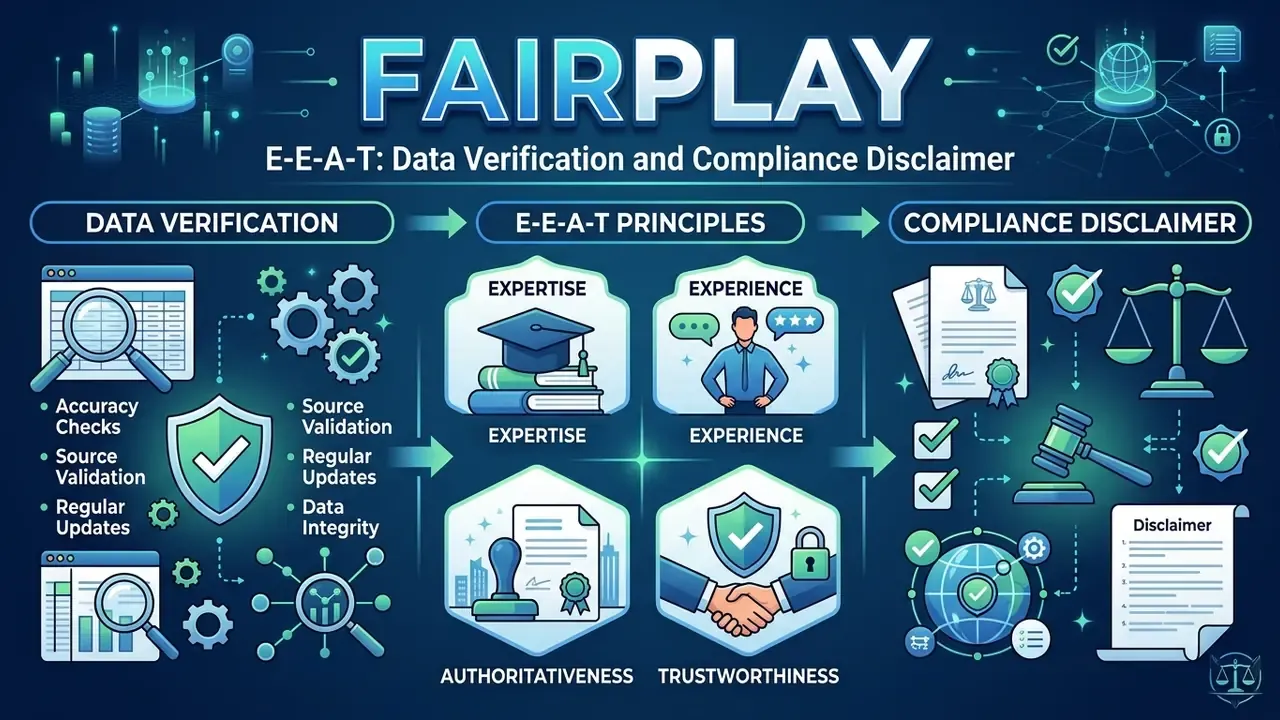
  • Editorial verification:payment terms, cashier limits and promotional tiers in this guide were cross-checked against published FairPlay payment pages and operator terms at the time of the latest editorial review (January 2026 update cycle).
  • Regulatory note:payment methods, minimum transaction limits, promotional offers and legal frameworks in India go through frequent administrative updates. Regulatory frameworks in India vary by state and are subject to change. Verify current payment terms inside your personal account settings. Real-money gaming carries financial risk and requires strict personal budgeting.
  • Scope:this guide is informational. It does not constitute legal, tax or financial advice.
Fairplay heading-banner

Account Verification and Cashier Access

To unlock full access to the deposit cashier, complete primary registration and phone or email verification through a One-Time Password (OTP). Then open My Account → Profile → KYC Verification and submit a government-issued photo ID (Aadhaar, PAN card or passport), a live selfie where requested, and proof of address.

Finishing verification before your first payment keeps your financial instruments (bank accounts, UPI IDs, cards or digital wallets) permanently linked to your profile, without administrative delays later during cashouts. When you add banking details, such as account number, IFSC code, bank name or UPI ID, the name on the account must match the name on your ID document character for character. Manual compliance review of uploaded documents usually completes within 24 to 48 hours. In time terms, it is far cheaper to finish KYC while your balance is still empty.

Account Verification and Cashier Access. To

How to Choose Your Preferred Payment Method

Choosing a preferred payment method means comparing four things: transaction speed, potential banking fees, minimum deposit thresholds and future withdrawal compatibility. UPI and instant e-wallets update the balance immediately and turn payouts around quickly, which fits mobile-first users in India.

Direct bank transfers (IMPS/NEFT) accommodate larger deposit limits, yet may need manual verification of UTR reference numbers. That stretches processing from a few minutes to several business hours. Cryptocurrency rails sit between the two: settlement depends on blockchain confirmations rather than banking hours, so they behave predictably at night and on bank holidays, though network congestion can slow them.

A practical selection matrix looks like this:

How to Choose Your Preferred Payment
  • Small, frequent top-ups on mobile:UPI (PhonePe, Google Pay, Paytm, BHIM).
  • Single large funding event:IMPS/NEFT bank transfer or a verified crypto transfer.
  • Bank-statement privacy:Skrill, Neteller or AstroPay (expect additional compliance checks).
  • Card habit or no UPI app:Visa or Mastercard, remembering that card refunds are limited and payouts default to bank transfer.
Fairplay heading-banner

One quiet detail that many players miss: your deposit rail is also your default payout rail. Pick it as if you had already won.

FairPlay Payment Methods in India

FairPlay supports five main payment method categories for Indian users: UPI applications, Net Banking and direct bank transfer, debit and credit cards, digital e-wallets, and cryptocurrency. Each serves a different priority, whether that is speed, accessibility, ticket size or banking privacy.

Comparing these options helps you pick a channel that balances convenience with solid security. Below is a breakdown of available payment channels for Indian accounts, including the deposit thresholds most commonly published across FairPlay payment pages.

Comparative overview of FairPlay payment methods in India

FairPlay Payment Methods in India. FairPlay
Payment methodPrimary use caseReported min / max deposit (INR)Expected credit timeVerification requirementWithdrawal compatibility
UPI (PhonePe, GPay, Paytm, BHIM)Mobile-first instant deposits via VPA or QR code scanning₹100–₹500 min / up to ₹100,000 per transferInstant to 60 secondsStandard account setup; name on UPI must match IDFully supported; fastest payout rail (30 mins to 2 hours)
Net Banking / direct bank transfer (IMPS/NEFT)Direct transfers from Indian bank accounts, medium to large amounts₹500–₹5,000 min / up to ₹500,000 per transfer5 minutes to 24 hours (manual UTR check)Full account verification plus bank statement matchFully supported; paid out by bank transfer within 1 to 24 working hours
Digital wallets (Skrill, Neteller, AstroPay, EcoPayz, Jeton)Intermediary wallet balances for users seeking bank statement privacy₹500 min / up to ₹200,000 per transferInstantWallet KYC plus account verificationSupported on select platforms; medium processing time (30 mins to 6 hours)
Debit / credit cards (Visa, Mastercard, Maestro)Direct card payments through PCI DSS encrypted gateways₹1,000 min / up to ₹100,000 per transferInstantCardholder name must match profile ID exactlyLimited direct card refunds; withdrawals default to bank transfer
Cryptocurrency (USDT, BTC, ETH, LTC)Borderless, high-ticket deposits independent of banking hours₹2,000 min / no fixed operator cap for verified accounts10 to 30 minutes (blockchain confirmations)Wallet address verification plus account KYCSupported; fast payout rail (1 to 2 hours)

For broader industry context on how these rails are integrated, settled and audited by operators, see our overview of payment methods in iGaming.

FairPlay UPI: Instant Payments via PhonePe, GPay and Paytm

FairPlay UPI integration lets users complete instant mobile transactions through major Indian payment apps: PhonePe, Google Pay, Paytm, Amazon Pay UPI, CRED UPI and BHIM. When you start a deposit, the system generates a dynamic Virtual Payment Address (VPA) or a transaction QR code.

Once you approve it inside your UPI client, the banking system issues a unique 12-digit UTR (Unique Transaction Reference) number. That reference is your proof of payment and it drives automatic crediting to your cashier balance. Each app confirms success a little differently. PhonePe and Google Pay show a status screen and store the record in history, while Paytm and BHIM also surface a UPI reference ID you can copy straight into the cashier field.

FairPlay UPI Instant Payments via PhonePe

How to Deposit via PhonePe, Google Pay or Paytm

  1. PhonePe: select UPI in the cashier, enter your PhonePe VPA (username@ybl), accept the collect request inside the PhonePe app, then authorise it with your 6-digit UPI PIN. Wait for the "Payment Successful" status before closing the app.
  2. Google Pay: choose GPay at checkout, enter your registered GPay mobile number or VPA, approve the notification in the Google Pay app, then copy the 12-digit UTR code back into the cashier if manual confirmation is requested.
  3. Paytm: scan the dynamic QR code generated by the FairPlay deposit cashier using the Paytm scanner, approve the INR payment from your Paytm wallet, Paytm Payments Bank or linked account, and wait for the automated balance reflection. The UPI reference ID in the Paytm receipt is your proof if reconciliation lags.
  4. BHIM: open BHIM, choose "Send", paste the cashier VPA, enter the amount, and confirm with your UPI PIN. The confirmation page shows a success mark, and your bank sends a parallel SMS carrying the same reference number.
How to Deposit via PhonePe, Google

Net Banking, Cards and Digital Wallets

Net Banking and debit or credit cards (Visa, Mastercard, Maestro) fund your account directly, with no external wallet registration. Net Banking connects to major Indian public and private banks and authorises the transfer inside your bank's own portal. Published FairPlay pages list Net Banking with a ₹500 minimum and, on some configurations, a settlement window of up to 1 to 3 business days.

Digital e-wallets such as Skrill, Neteller and AstroPay work as an intermediate financial buffer. They shield your primary bank details from direct merchant interaction, which some players value.

«E-wallets such as Skrill and NETeller are extremely popular in online casinos, yet they can obscure identification of the source of funds.» UNLV International Gaming Institute, Online Casinos, Alternative Payment Mechanisms and the Finance Crime Risks (2024). https://doi.org/10.17632/9j5gcygnwg.1

Because of that opacity, wallet deposits attract heightened Anti-Money Laundering (AML) monitoring. Extra compliance checks can appear during balance processing or before a first payout.

«Prepaid cards receive the highest AML risk rating (9 out of 9) in the remote casino sector, while e-wallets score a mid-range 4.» British Gambling Commission, Money Laundering and Terrorist Financing Risk Assessment, Remote Casino Sector (2026). https://www.gamblingcommission.gov.uk

The practical consequence is easy to state. If you value speed and a clean compliance trail, a bank-linked rail such as UPI or IMPS usually clears faster than a wallet-inside-a-wallet chain, even though wallets are instant on the deposit leg.

Cryptocurrency Deposits (USDT, BTC, ETH)

FairPlay supports direct cryptocurrency transfers, including Tether (USDT on TRC-20 and ERC-20 networks), Bitcoin (BTC), Ethereum (ETH) and Litecoin (LTC). Crypto deposits carry a reported minimum of ₹2,000 in INR-equivalent value and offer higher maximum thresholds for verified and VIP accounts. Payments validate automatically once the required network confirmations land, usually within 10 to 30 minutes.

Three operational rules matter here:

  • Network match:sending USDT over the wrong network, for example ERC-20 funds to a TRC-20 address, can make the deposit unrecoverable. Copy the exact chain shown in the cashier.
  • Rate lock:the INR credit uses the exchange rate applied at confirmation time, not the moment you press send, so volatile assets can credit slightly above or below your expectation.
  • Closed loop still applies:crypto withdrawals return to a wallet address tied to your verified account, with reported minimum payouts around ₹4,900 for BTC and ₹7,500 for USDT.
Fairplay heading-banner

FairPlay Bank Transfer: Direct IMPS/NEFT Funding

A FairPlay bank transfer (IMPS/NEFT) sends money straight from your personal Indian bank account to the platform's designated receiving account. In this manual cashier flow you copy the active account number, IFSC code and recipient name shown in the cashier area, then run the transfer from your banking app or net banking portal.

After the transfer completes, return to the deposit cashier screen, enter the exact transferred amount, and paste the 12-digit UTR reference to finalise manual approval. Some cashier versions also ask you to upload the bank receipt (PDF or screenshot) as payment proof before pressing SUBMIT. As the Reserve Bank of India notes in its NEFT documentation, the sender always initiates NEFT through their own bank channel, never through an intermediary who "arranges" the transfer for a fee.

FairPlay Bank Transfer Direct IMPS NEFT

FairPlay Minimum Deposit and Transaction Limits

Published pages report a FairPlay minimum deposit in the range of ₹100 to ₹500 for mobile and UPI rails, roughly ₹1,000 for cards, ₹2,000 for cryptocurrency and up to ₹5,000 on some bank-transfer configurations. Reported maximum single-transaction caps run from ₹100,000 for standard UPI to ₹500,000 for verified bank transfers, and several operator pages state "no maximum limit" for fully verified accounts. These figures differ between pages and update cycles, so treat them as indicative. The live cashier field is the single source of truth.

Knowing your limits prevents rejected payments. It also keeps your entertainment budget under control, which matters more.

FairPlay Minimum Deposit and Transaction Limits

Factors Influencing Minimum and Maximum Caps

Caps come from three places: payment channel technical constraints, individual bank compliance rules, and your account verification status. The Reserve Bank of India (RBI, 2024–2026) caps standard merchant UPI transactions at ₹100,000 to ₹200,000 per transfer, while UPI Lite on-device wallets are limited to smaller micro-payments.

«Since 1 January 2020, the RBI has prohibited banks from levying direct or indirect charges on users for UPI transactions, although some banks introduce indirect fees.» Reserve Bank of India, Annual Report on Digital Payments, with IIT Bombay analysis of UPI charges (2024). https://www.rbi.org.in

Unverified profiles sit under restrictive daily deposit caps to limit financial risk, whereas accounts that clear full KYC unlock higher single-transaction ceilings. Rail-specific ceilings published across FairPlay guides show the pattern: UPI roughly ₹100 to ₹100,000, IMPS roughly ₹500 to ₹200,000, direct bank transfer roughly ₹1,000 to ₹500,000. Your bank's own fraud engine can also trim your effective cap temporarily if it flags a merchant payment for review.

How to Check Cashier Limits Before Depositing

Open your account menu, go to the Cashier or Wallet section, and tap your intended payment method. The entry field displays the minimum required amount, the maximum allowed limit for that rail, and any third-party fee notice.

For tighter control over spending, set personal daily, weekly or monthly deposit ceilings in the Responsible Gaming settings. Note the asymmetry most operators apply: a decrease in your self-set limit may take effect after a cooling-off period of about 24 hours, while an increase normally requires explicit reconfirmation.

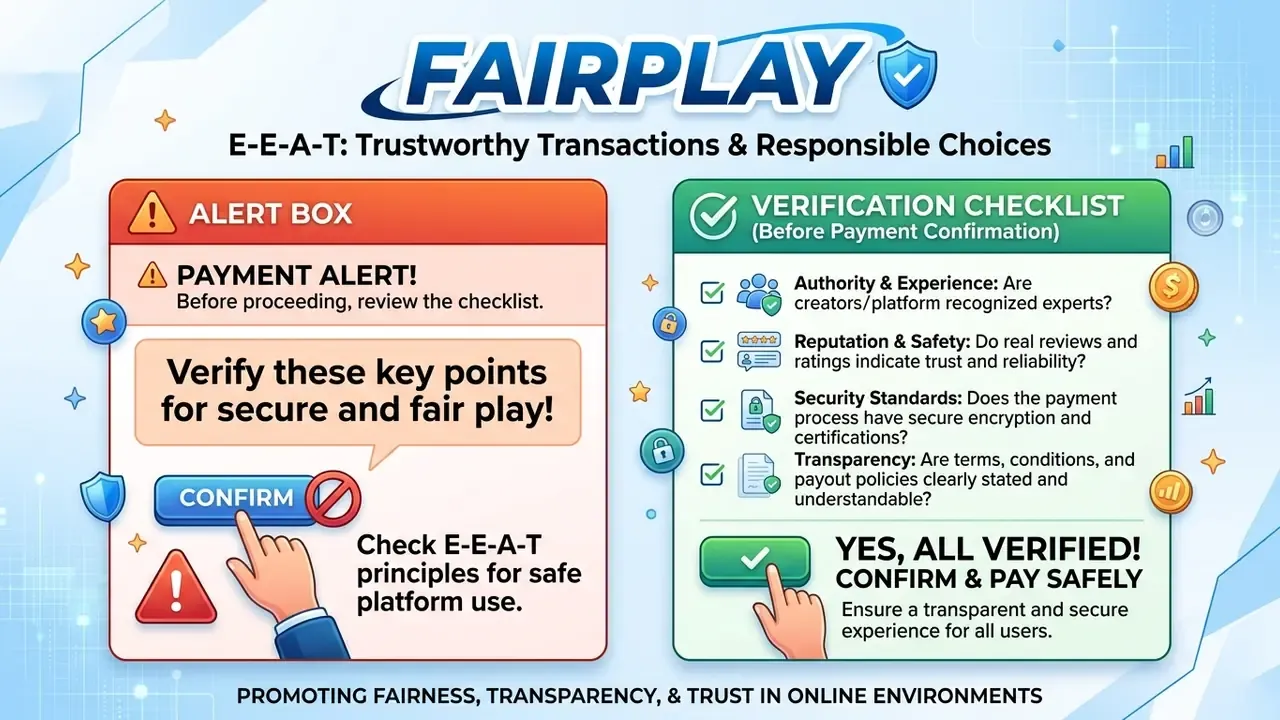
⚠️ IMPORTANT: PRE-PAYMENT CHECKLIST Before confirming any financial transaction, run these checks:

  1. Payee identity matching: confirm that the recipient bank account or UPI VPA matches the official cashier details shown in your current session. European "Verification of Payee" frameworks classify results as exact match, close match or no match, and a close match is still a reason to stop and re-check.
  2. Account name consistency: the bank account, UPI profile, wallet or card must be registered under your exact legal name as it appears on your verified ID. Third-party transfers get rejected or locked.
  3. Amount discipline: keep the figure between the displayed minimum and maximum for that rail. A ₹100 shortfall is the single most common reason a welcome bonus fails to attach.
  4. Reference code capture: copy and keep the 12-digit UTR or transaction reference number, and save a screenshot of the bank confirmation screen until your platform balance updates.

How to Make a FairPlay Deposit: Step-by-Step Process

1
Sign in to your profile: open the official portal or app and log into your verified account with your phone number or User ID and password, plus OTP where enabled.
2
Access the cashier: use the top navigation bar and select Deposit, Wallet or Add Funds.
3
Select your preferred payment rail: choose UPI, Bank Transfer, Net Banking, E-wallet, Card or Crypto from the active options list.
4
Specify the deposit amount: enter the figure in Indian Rupees (INR), making sure it meets or exceeds the minimum for that method, for example ₹500 for UPI or ₹2,000 for crypto.
5
Authorise the external payment: scan the displayed QR code, accept the UPI collect request in your app, complete an IMPS transfer through net banking, or broadcast the on-chain transaction.
6
Confirm and verify the balance: enter the 12-digit UTR reference code or transaction hash if prompted, submit the confirmation form, and check that your cashier balance reflects the funds.

Depositing via the FairPlay Mobile App

The FairPlay app uses app-to-app deep linking. Choose a mobile rail such as PhonePe, Google Pay or Paytm in the app cashier, and the application hands you over to your installed banking client.

Authorise the payment with your UPI PIN inside that banking app, and the system returns you to the cashier screen with a success confirmation, no manual copying needed. Deposit minimums inside the app match the desktop cashier for the same rail. Published app pages have listed ₹300 and ₹500 minimums on different versions, so read the on-screen field instead of trusting a remembered figure. Some bonuses and promotions are app-exclusive, in which case the offer toggle appears only in the mobile cashier.

Depositing via the FairPlay Mobile App

What to Check After Payment Confirmation

Once authorisation goes through, open your balance dashboard and confirm the credit. If the network between your bank and the payment gateway is congested, the update can take several minutes.

Debited but still unchanged after 15 minutes? Save the 12-digit UTR number, screenshot the bank debit notification, and contact official customer support in live chat with the exact amount, timestamp and rail used.

Here is a real-shaped example. A user submitted an IMPS bank transfer but forgot to enter the 12-digit UTR reference in the cashier window. The automated system could not match the incoming funds to the profile. The user opened a live support ticket from account settings and uploaded the banking PDF receipt showing the UTR. Support verified the settlement manually and credited the full INR amount within 45 minutes. The lesson is procedural, not technical: manual rails need manual proof, and the receipt is the fastest route to reconciliation.

What to Check After Payment Confirmation

Processing Times, Fees and Security of FairPlay Payments

Deposits through UPI and digital wallets credit instantly or within 30 to 60 seconds, with no platform service fee. Traditional bank transfers take between 15 minutes and 24 hours depending on interbank settlement cycles. Operator terms state that FairPlay charges no deposit fees; any bank, card-issuer or wallet charge is a matter between you and that provider.

Understanding the mechanics, and the security layers behind them, helps you pick the safest funding channel for your habits.

Which Methods Are Usually Faster for Deposits

UPI payments and digital e-wallets are the fastest rails for funding an account.

«UPI is a mobile-based, 24×7 fast payment system that enables instant transfer of funds using a virtual payment address or QR code.» Reserve Bank of India, Annual Report on Payment Systems (2024–2025). https://www.rbi.org.in

Direct IMPS/NEFT transfers depend on clearing cycles and manual reconciliation, so they trail automated mobile UPI channels. Cards are instant on the deposit leg, yet slow and restricted on the payout leg. Crypto lands in 10 to 30 minutes depending on network load. Published FairPlay tables are not always consistent on payout timing for the same rail, since UPI appears variously as 1 to 30 minutes, 1 to 12 hours and 6 to 12 working hours. One more reason to treat the cashier screen as authoritative.

Safe Habits During Payments and Bank Transfers

Financial transactions on reputable platforms run on end-to-end SSL/TLS 256-bit encryption and PCI DSS-compliant gateways, so full card data is tokenised rather than stored on the platform.

Keep these rules in place:

  • Enable Two-Factor Authentication (2FA) on your main profile right after installation or first login.
  • Never authorise deposits on public unsecured Wi-Fi.
  • Never share OTPs, UPI PINs or login credentials with anyone, including people claiming to be support agents.
  • Refuse payment requests from third-party agents or unverified Telegram and WhatsApp intermediaries. This is the most common vector for lost deposits, and money sent to an "agent" sits outside the operator's reconciliation system entirely.
  • Re-confirm your saved payout method in account settings after every app update, because payment profiles sometimes need re-validation.
Safe Habits During Payments and Bank

FairPlay First Deposit Bonus and Promotional Terms

Disclaimer: this information is general in nature and does not replace professional advice. Bonus terms, wagering requirements and limits are set by the operator and may change without prior notice.

The FairPlay First Deposit Bonus matches your initial payment by a promotional percentage. Published operator and review pages report a tiered structure from 100% up to 300% of the qualifying deposit, with a commonly stated maximum bonus of ₹50,000. Regional variants advertise 200% up to ₹20,000 plus free spins. Since the grid is promotional and regional, read the table below as the typical published shape rather than a permanent guarantee, and confirm the tier applied to your account inside the cashier.

FairPlay welcome bonus tier structure (typical published grid)

FairPlay First Deposit Bonus and Promotional
Deposit amount (INR)Bonus percentageMax bonus amountWagering requirement
₹500 to ₹5,000300%₹15,00030x turnover
₹5,001 to ₹10,000200%₹20,00030x turnover
₹10,001 to ₹100,000100%₹50,00030x turnover

The wagering requirement is 30x, or 20x depending on the active seasonal variant, so always check your cashier terms before opting in. Welcome offers do raise your starting funds. They also come with turnover conditions that must be cleared before any related winnings can leave the account.

What to Check in the First Deposit Bonus Terms

Before claiming a first deposit incentive, read four things carefully:

  1. Minimum qualifying deposit: the threshold that activates the offer, commonly ₹500, though some pages state ₹100 or ₹300.
  2. Wagering multiplier (turnover): how many times the bonus amount, or deposit plus bonus, must be wagered in real games before funds unlock for withdrawal, typically 30x, sometimes 20x or 25x.
  3. Validity window: the period allowed to complete playthrough, usually 14 to 30 days.
  4. Game contribution rates: how much each game type counts toward wagering. Slots often contribute 100%, while live dealer tables may contribute only 10%, or nothing.

Regulatory developments show why this arithmetic matters. High wagering requirements push player exposure up sharply.

What to Check in the First

«The Gambling Commission has set a maximum wagering requirement on bonus funds of no more than 10x, and mixing products within a single offer is prohibited from 19 January 2026.» British Gambling Commission, Consultation Response on Socially Responsible Incentives (LCCP/RTS) (2024–2025). https://www.gamblingcommission.gov.uk

Applied to real numbers: a ₹5,000 deposit with a 300% match creates ₹15,000 of bonus funds, and at 30x turnover that means ₹450,000 of qualifying wagers inside the validity window. Prefer lower multipliers where you can. If you intend to withdraw quickly, declining the bonus is a legitimate choice, because a cash-only balance faces only the 1x closed-loop turnover rule.

When the Bonus May Not Apply

A welcome bonus fails to credit if your first deposit falls under the promotional minimum, if you register multiple accounts from the same IP, device or household (breaking one-bonus-per-player policies), or if your chosen payment method sits outside promotional eligibility.

Depositing before you verify your phone number, or before you switch on the promotion toggle in the cashier, can also make the system treat the payment as plain cash with no bonus attached. Bonuses are non-transferable, and they can be forfeited for bonus abuse or breach of promotion terms. If you think an eligible offer was missed, raise it in live chat straight away. Operator support guidance indicates that "bonus not credited" tickets are usually reviewed within 1 to 2 hours of being reported, and retroactive attachment becomes much harder once the deposit has been wagered.

When the Bonus May Not Apply

FairPlay Withdrawals: How Deposits and Withdrawals Are Linked

Disclaimer: this information is general in nature and does not replace professional advice. Withdrawal policy, AML checks and crediting times are determined by the operator and by applicable legislation.

FairPlay withdrawals follow a strict "closed-loop" policy: payouts return to the exact same payment method and bank account used for the original deposit. Understanding that link prevents friction later, when you actually want the money out.

FairPlay withdrawal methods and processing limits

Withdrawal methodMinimum payoutMaximum payoutAverage execution time
UPI (PhonePe, GPay, Paytm)₹1,000₹100,000 per transaction30 minutes to 2 hours
Bank transfer (IMPS/NEFT)₹1,000₹500,000 per transaction1 to 24 working hours
Cryptocurrency (USDT/BTC)₹4,900 (BTC) / ₹7,500 (USDT)No fixed limit1 to 2 hours
E-wallets (Skrill, Neteller)₹1,000₹200,000 per transaction30 minutes to 6 hours
Cards (Visa / Mastercard)₹1,000₹100,000 per transactionRouted to bank transfer; 1 to 3 working days

Operator pages publish different minimum payout thresholds, ₹500 on some terms pages and ₹1,000 on others, plus different processing windows. Verify the figure shown in the withdrawal form for your rail and region.

Verifying Your Account and Payout Method

Before submitting a withdrawal request, complete full profile verification: phone, email and ID documents (KYC). The bank account or UPI VPA you submit for payout must carry the exact same name as your verified registration profile.

Try to withdraw to an unverified bank account or a third-party payment profile, and automated security systems will flag and reject the transaction.

«Among 4,049 online gamblers, 38% of those who received a message about a winning streak withdrew funds the same day, and their withdrawal amounts were significantly higher.» Auer & Griffiths, Nudging Online Gamblers to Withdraw Money, Data in Brief, Nederlandse Loterij dataset (2023). https://doi.org/10.17632/9j5gcygnwg.1

Put plainly, a transparent payout path is not just a compliance box. It measurably shifts behaviour toward banking wins instead of recycling them. Withdrawals above ₹50,000 commonly trigger enhanced due diligence, so uploading a government ID and address proof in advance shortens the queue noticeably. To add a payout profile, open Withdrawal → select the banking method → Add New, then enter account number, IFSC and account holder name exactly as printed on your statement.

An account verification audit shows how this plays out. A player requested ₹45,000 by bank transfer after funding through UPI. Compliance flagged the payout because the registered bank account name differed slightly from the uploaded Aadhaar ID, a middle-name mismatch. The player supplied an official bank statement showing both the account number and the full legal name matching the government ID. Compliance updated the bank profile status, cleared the hold, and released the full payout within 24 hours.

Put plainly, a transparent payout path

Why the Deposit Method Shapes Your Withdrawal Options

Your deposit method dictates the available withdrawal channels because of international Anti-Money Laundering (AML) standards. Research from the British Gambling Commission (2026 Remote Gambling Risk Assessment) confirms that closed-loop payment systems stop platforms from being used for illicit fund conversion.

«In 2023, withdrawals were the leading topic of consumer complaints to the Commission, more than 2,400 contacts, mainly about delays and excessive documentation requirements.» British Gambling Commission, Annual Report 2023–2024. https://www.gamblingcommission.gov.uk

That complaint pattern is exactly why day-one rail choice matters. Fund with a wallet or card that cannot receive payouts, and your winnings default to a slower bank-transfer route with extra document checks. One more standard term: deposited cash balances must be wagered at least 1x in active play before a withdrawal request, even when no promotional bonus was claimed.

FairPlay Deposit FAQ

Can I deposit on FairPlay in rupees or another currency?

Yes. FairPlay supports transactions in Indian Rupees (INR) natively. Local INR channels such as UPI, Net Banking and domestic bank transfers let Indian users fund their accounts without currency conversion fees.

Deposit with an international card denominated in USD or EUR, and your issuing bank may add conversion fees of roughly 2% to 4% on top of the amount. Crypto deposits convert to an INR balance at the rate applied at confirmation.

Can I use someone else's UPI ID or bank card to deposit?

No. Every payment instrument, whether UPI ID, bank account, debit or credit card, wallet or crypto address, must be registered under your exact legal name as printed on your verified government ID. Third-party deposits are prohibited under anti-fraud and AML policies, and breaking that rule leads to account suspension and balance locks.

My bank account was debited but the funds were not credited. What now?

Wait 15 minutes and refresh the cashier dashboard first. If nothing changes, find the 12-digit UTR reference in your bank app history, screenshot the debit confirmation, and send the details, amount, timestamp and rail, to official live support for manual reconciliation.

Are there any deposit fees on FairPlay?

Platform operators generally charge no direct deposit fee for INR payments through UPI or standard Net Banking. Banks, card issuers or international e-wallet providers may still apply their own transaction or service charges. Blockchain network fees on crypto transfers are always paid by the sender.

Can I add more than one card or payment method?

Yes. You can link several deposit and withdrawal instruments, provided each one is in your own name as account or cardholder. At payment time, simply pick the card, UPI ID or wallet you want from the cashier list.

Can I cancel a withdrawal that is already processing?

Once a withdrawal enters the compliance queue, you cannot cancel it yourself. If you need to stop a transfer, contact 24/7 live customer support immediately. After release to the banking network, reversal is no longer possible.

Is identity verification mandatory, and what happens with underage accounts?

FairPlay enforces an 18+ age policy strictly. KYC needs a valid government photo ID (Aadhaar, PAN card or passport) plus proof of address. Accounts belonging to minors are permanently frozen, the associated personal data is deleted, and no payout is processed.

How do I raise my deposit and withdrawal limits?

Complete full verification: ID, address proof and payment method confirmation. That raises both single-transaction and daily caps. Very large payouts may still need extra documents, such as a bank statement showing the account number and full legal name.

Why is my withdrawal slower than advertised?

Stated windows are targets, not guarantees. Bank holidays, interbank clearing cycles, incomplete KYC documents or automated compliance flags can add 24 to 48 hours. Submitting complete documents up front is the single most effective way to stay inside the advertised window.

Scale like that explains why the core guidance, name matching, closed-loop payouts and 1x turnover, is standardised across licensed operators rather than invented brand by brand.

Green Flags and Red Flags Before You Deposit

A short scan before your first top-up saves more money than any bonus adds. Use this as a pre-deposit filter.

Green flags

  • The cashier shows the minimum and maximum amount for your chosen rail on screen, in INR.
  • Withdrawal terms, KYC requirements and the 1x turnover rule are stated in plain English before you pay.
  • Deposit and payout rails are matched, and the payee name check is explained.
  • Responsible gaming tools, such as deposit limits, cooling-off and self-exclusion, sit in account settings, not buried in a footer.
  • Support answers a payment question in live chat with specifics, not scripts.

Red flags

  • Anyone asks you to pay an "agent" through personal UPI, Telegram or WhatsApp.
  • Bonus terms omit the wagering multiplier, expiry window or game contribution rates.
  • The account name on your payment instrument differs from your ID and nobody flags it.
  • Promises of guaranteed wins, fixed monthly returns or "no-risk" play. There is no such thing.
  • Pressure tactics: countdown timers on your first deposit, or repeated prompts to raise your limit.

If two or more red flags appear, pause. Verify the terms in your account, ask support in writing, and only then decide whether to proceed. No deposit is urgent.

Green Flags and Red Flags Before

Responsible Gambling Reminder

Treat real-money gaming as paid entertainment, never as income or a way out of financial pressure. Set strict daily or monthly deposit limits before you fund anything. Never gamble with money set aside for essential living costs. Withdraw wins instead of recycling them, keep a simple record of every deposit and payout, and never borrow to deposit.

If your gaming habits start to feel out of control, use self-exclusion tools, set a cooling-off period, and reach out to professional counselling services. Participation is restricted to users aged 18 and above. Read the terms in your account, check the live cashier figures, and decide calmly. That is the whole ask.

Responsible Gambling Reminder. Treat real-money gaming